 Parler
 Gab
Gab Copy
Copy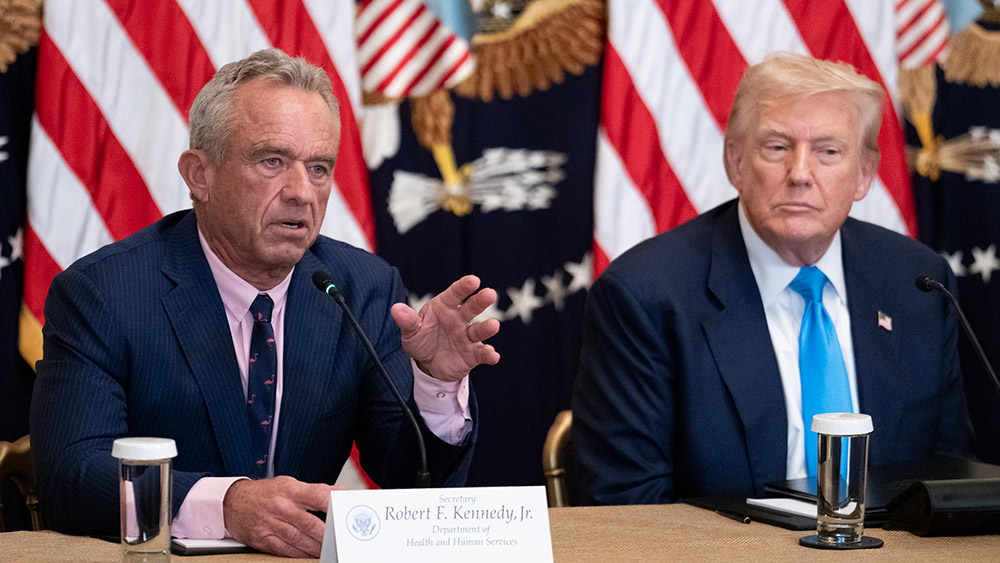
- Dr. Nicole Saphier, President Trump's surgeon general nominee, deleted numerous social media posts criticizing the president and Health and Human Services Secretary Robert F. Kennedy Jr. on key health policies.
- Archived tweets show she questioned administration transparency on measles outbreaks, suggesting political motives for withholding elimination status data until after midterm elections.
- Saphier criticized Trump's public remarks about Tylenol use during pregnancy, demanding transparency about scientific data behind the advice.
- She objected to Kennedy's overhaul of the CDC's Advisory Committee on Immunization Practices, citing lack of expertise and diversity of thought among new appointees.
- White House defends Saphier as an accomplished physician who will advance the MAHA agenda, but the revelations may complicate Senate confirmation.
Health nominee's hidden history
The White House has a transparency problem with its own surgeon general pick. Dr. Nicole Saphier, President Donald Trump's third nominee for the nation's top doctor, spent months criticizing the very administration she now seeks to serve—and appears to have scrubbed the digital record of those objections. Archived social media posts, preserved through the Wayback Machine and reported by CNN's KFile, reveal that Saphier repeatedly broke with Trump and Kennedy on politically sensitive health issues before being selected for the role. The revelations raise questions about her policy consistency and could complicate what was already expected to be a contentious confirmation process.Measles transparency questions
In March 2026, just two months before her nomination, Saphier suggested the administration was hiding the full scope of measles transmission in the United States. She wrote that the White House may not want to admit the country's measles elimination status was gone until after the midterm elections. The post has since been deleted. The comment came amid growing measles outbreaks that have challenged Kennedy's leadership at HHS. Saphier, a radiologist and former Fox News medical contributor, appeared to question whether public health data was being managed for political advantage rather than public safety.Tylenol controversy and personal frustration
Saphier's deleted tweets also targeted Trump's public statements about acetaminophen. When the president told Americans to keep Tylenol away from young children, Saphier pushed back forcefully. In October 2025, she wrote that this was not the first or second time Trump had made such remarks, demanding transparency about "the data presented to substantiate these statements." Her criticism took on a personal dimension when her own son developed a high fever. "I'm angry that I am now questioning giving him Tylenol," she wrote. "Do data exist showing harm to kids that haven't been shared with the public or is the Tylenol 'controversy' purely hyperbolic and conjecture?"Vaccine advisory committee overhaul draws scrutiny
Saphier also criticized Kennedy's restructuring of the Advisory Committee on Immunization Practices. She claimed the newly appointed members lacked "diversity of thought and areas of expertise, especially in data interpretation." The ACIP overhaul has been a priority for Kennedy, who has sought to reshape the committee's approach to vaccine recommendations. Saphier's objections place her at odds with the administration's direction on one of the most consequential public health advisory bodies in the federal government.White House defends nominee amid scrutiny
White House spokesperson Kush Desai defended Saphier, calling her an accomplished physician who practiced radiology at Memorial Sloan-Kettering. He highlighted her advocacy on breast cancer prevention, opposition to COVID-19 mandates and criticism of politicized science. Desai said Saphier "will be a powerful asset for President Trump and work tirelessly to deliver on every facet of his MAHA agenda." Some of Saphier's posts that remain public show support for Trump and Kennedy's health movement. But the deleted content creates a notable contrast between her private critiques and her current public alignment with the administration.The shifting politics of public health
The Saphier controversy reflects a broader tension in American health governance. The MAHA movement has reshaped the political landscape around health policy, with 41 percent of Americans now identifying with the movement, according to a KFF poll. Yet that support is driven primarily by health care costs and food safety concerns—not the vaccine debates that have dominated the movement's public image. Meanwhile, Sen. Rand Paul is pushing for an indictment of Dr. Anthony Fauci before the statute of limitations expires on allegations he lied about gain-of-function research. And the FDA has authorized fruit-flavored vapes for adults, reversing years of aggressive regulation against flavored products. These parallel developments illustrate how health policy has become increasingly politicized across multiple fronts, with nominees like Saphier caught between professional medical standards and political expectations.A confirmation test for health transparency
Saphier's deleted tweets present a challenge for both the nominee and the administration. Senators will likely press her on whether her past critiques reflected genuine policy disagreements or merely performative commentary for a Fox News audience. The White House has signaled it will stand by her, but the revelations add uncertainty to what was already Trump's third attempt to fill the surgeon general position. The episode underscores a broader question: In an era of heightened political scrutiny around vaccines, food safety and public health data, can any nominee survive the digital paper trail of their own evolving opinions? For Saphier, the answer may depend on whether she can convince senators that her past critiques were part of a medical professional's due diligence—not a fundamental disagreement with the administration she now serves. Sources for this article include: ChildrensHealthDefense.org Yahoo.com MSN.com
Sardines: The tiny fish with outsized health power
By Olivia Cook // Share
Cuba weighs $100M U.S. aid offer amid skepticism over Trump’s motives and ongoing fuel blockade
By Belle Carter // Share


The Final Betrayal: How technocracy’s promise of freedom became a cage
By Ramon Tomey // Share


U.S. and Ukraine Draft Landmark Drone Defense Agreement Amid Escalating UAV War
By Garrison Vance // Share

Syrian with 24 assault allegations was never deported before Cologne rampage
By isabelle // Share


Texas Declares Diesel Emergency as Fuel Supply Chain Strains
By healthranger // Share

Anthropic's IPO Looks Like a Speculative Disaster in the Making: Why I'm Staying Away
By healthranger // Share

Pentagon Plans 20% Reduction in General and Flag Officer Billets, Report Says
By bellecarter // Share

Anthropic IPO Prospectus Warns Investors of "Existential Risk to Humanity"
By bellecarter // Share