 Parler
 Gab
Gab Copy
Copy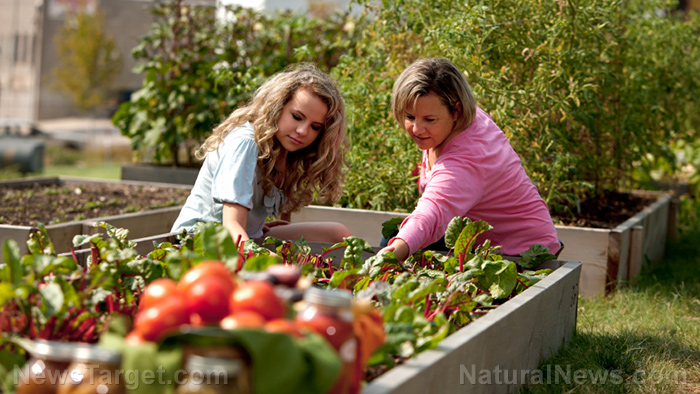
- The final chapter shifts from nutrition and DNA repair to the role of knowledge in helping people respond to uncertainty with greater confidence and agency.
- Adams argues that understanding challenges and focusing on constructive responses can help people move from helplessness toward deliberate action.
- Rather than simply storing emergency supplies, Adams promotes everyday self-sufficiency through gardening, food production, seed saving and cultivating useful plants.
- Sharing seeds, plant cuttings and gardening skills can turn one household's preparedness efforts into a broader network of capable families and communities.
- The chapter presents self-reliance as both practical and psychological, with knowledge, skills and resources passing from person to person and building lasting community infrastructure.
Turning knowledge into empowerment and preparedness
The final chapter of "UNBREAKABLE," to be streamed on Sept. 10 on BrightU, takes a notable turn. After exploring nutrition, DNA repair and the biological systems that Adams believes can support resilience, he shifts his attention to psychology: how knowledge can change the way people respond to uncertainty and how practical preparation can replace helplessness with a greater sense of agency. For the Health Ranger, the central message is not to dwell on frightening scenarios but to understand challenges and focus on constructive responses. "Fear paralyzes us, and knowledge, in contrast, will mobilize us," he says. The idea provides a framework for the chapter's closing argument: people who understand the principles behind their choices may feel better equipped to make deliberate decisions rather than simply reacting to events around them. That philosophy leads naturally to a broader discussion of self-sufficiency. Adams envisions households developing practical capabilities through gardening, food production, seed saving and the cultivation of useful plants. Instead of treating preparedness as a collection of supplies stored away for an emergency, he presents it as a set of skills practiced continuously in everyday life.When one household becomes a network
The most intriguing dimension of the chapter is its emphasis on sharing. A person who learns to grow broccoli sprouts can teach someone else. A gardener can share seeds or a plant cutting. Neighbors can exchange growing knowledge, while families can develop food and gardening practices that remain useful from one season to the next. "Community is the multiplier of individual resilience," Adams says. The concept transforms individual preparedness into something potentially much larger. One garden can become the starting point for another; one newly learned skill can move through a family and then into a neighborhood. Over time, practical knowledge becomes a form of community infrastructure, preserved not in a single institution, but through relationships between people. Adams also emphasizes that resilience involves passing knowledge forward. His vision includes sharing lessons about growing food, cultivating herbs and maintaining productive household systems, allowing useful practices to survive even when circumstances change. That makes the final chapter less about a single formula for preparedness and more about a philosophy of distributed capability. The household is the starting point, but the community is where the benefits multiply. The episode ultimately presents self-reliance as both practical and psychological. Learning how to grow something, preserve seeds or help another person develop the same skill can reinforce the feeling that individuals have meaningful choices in uncertain circumstances. "Every action you take is like planting a seed," Adams says. In the chapter's closing vision, those seeds are both literal and metaphorical. Plants can multiply, skills can spread and knowledge can move from person to person. The result is a model of resilience built gradually – one household, one garden and one shared lesson at a time.Want to know more?
Discover the concepts explored in Mike Adams' "UNBREAKABLE" course, which examines DNA integrity, cellular repair pathways, radiation exposure and the relationship between nutrition and genetic resilience, streaming on BrightU. Across 12 chapters, the course takes viewers through the fundamentals of DNA damage and repair, including NHEJ, homologous recombination, double-strand breaks and cellular mechanisms involving BRCA1, 53BP1 and CHK1. It also explores Adams' perspectives on spike protein, nuclear fallout, environmental stressors and the nutritional strategies he believes may support DNA repair. Whether you're new to the subject or looking to explore the science presented in the course in greater depth, you can purchase the "UNBREAKABLE" course package here to learn more about its framework for genetic preparedness and cellular resilience. Upon purchase, you'll gain access to the full 13-chapter course and accompanying educational materials covering DNA repair, nutrition, environmental exposure and Adams' proposed strategies for supporting the body's natural repair mechanisms. Sources include: BrighteonUniversity.com 1 BrightU.com BrighteonUniversity.com 2
Report Outlines Urban Survival Strategies for Civil Unrest and Infrastructure Failure
By Iva Greene // Share
“UNBREAKABLE” on BrightU: Building a resilient garden and kitchen for cellular protection
By Belle Carter // Share
Pakistan Hospital Fire Kills 14 Newborns
By Douglas Harrington // Share
Why Unigrid’s Sodium-Ion Batteries Are the Game-Changer for Off-Grid Energy Storage
By Mike Adams // Share
“UNBREAKABLE” on BrightU: Exploring genetic resilience in the face of nuclear fallout
By Belle Carter // Share
Your Food is Designed to Break Your DNA: Here’s How to Protect Your Genetic Integrity
By Mike Adams // Share
EU's energy ban blamed for soaring prices as bloc faces winter crisis
By isabelle // Share

CIA director delivers secret warning to Russia on Baltic states, Iran support
By isabelle // Share
Bad sleep habits linked to painful hemorrhoids, researchers say
By isabelle // Share

Why a Third Party Won't Save America, But It Might Help Manage the Reboot
By healthranger // Share