Join the movement to end censorship by Big Tech. StopBitBurning.com needs donations and support.
Radishes Offer Nutrients and Potential Health Benefits, Report Says
By cocosomers // 2026-09-14
Mastodon
 Parler
 Gab
Gab Copy
Copy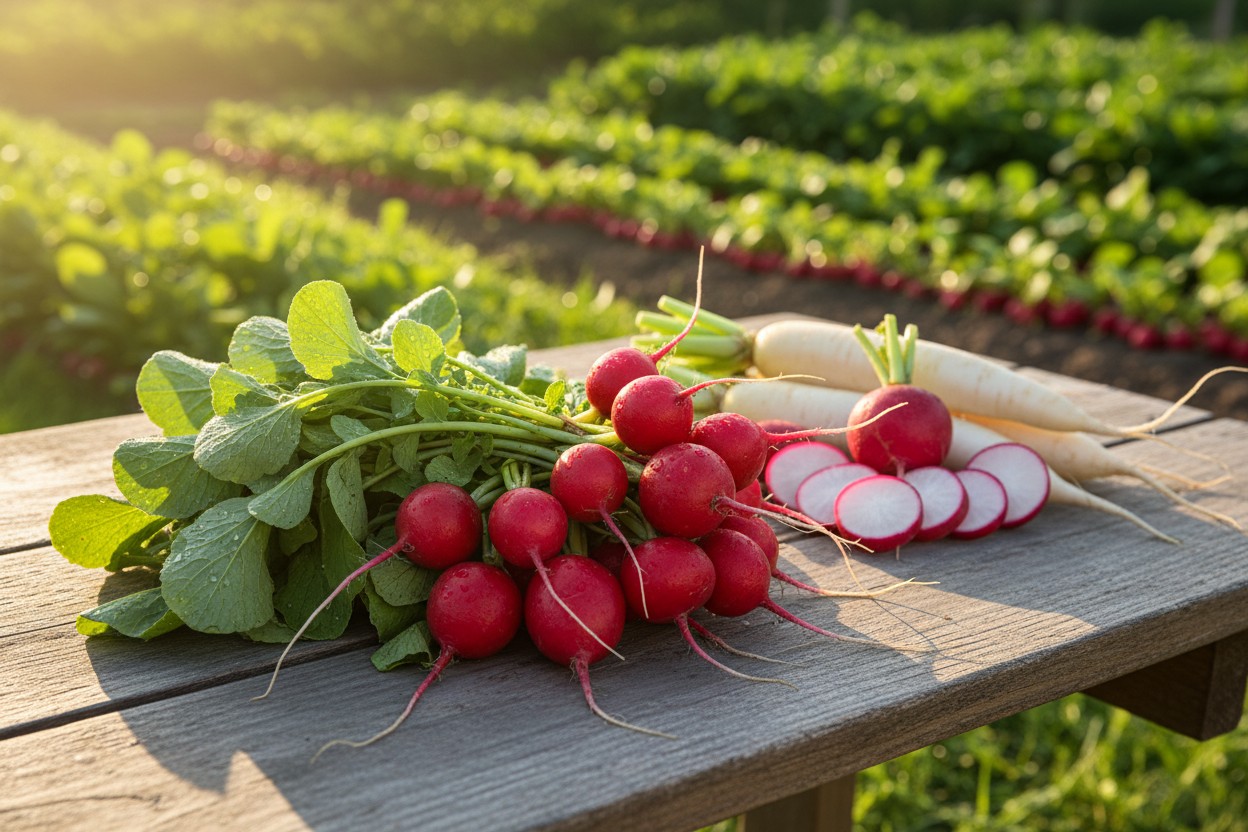
Radishes are root vegetables belonging to the Brassica family, placing them alongside broccoli, kale, cauliflower, cabbage, and turnips, according to a Healthline report on the benefits of radishes [1]. The report stated that radishes are "root vegetables packed with nutrients" and noted that they have been used in Ayurveda and Traditional Chinese Medicine to treat conditions including fever, sore throat, bile disorders, and inflammation [1].
The same report stated that a 1/2-cup serving of sliced radishes contains about 12 calories and virtually no fat, and provides about 14 percent of the recommended daily allowance of vitamin C [1]. Most studies on radishes have been conducted on animals rather than humans, the report stated, though the vegetable has been used as a folk remedy for centuries [1].
The findings arrive as independent researchers and natural health outlets continue to document the nutritional density of inexpensive, easily grown vegetables. Radishes mature in about 25 days and can be grown in both spring and fall, making them an option for home gardeners seeking a fast-growing crop, according to Mercola.com [2].

Nutritional Profile and Low-Calorie Snack Option
The Healthline report stated that radishes are a good source of vitamin C, an antioxidant that helps battle free radicals and plays a role in collagen production, which supports healthy skin and blood vessels [1]. Radishes also contain small amounts of potassium, folate, riboflavin, niacin, vitamin B-6, vitamin K, calcium, magnesium, zinc, phosphorus, copper, manganese, and sodium, according to the report [1]. A 1/2-cup serving provides 1 gram of fiber, and eating a couple of servings each day helps reach daily fiber intake goals, the report stated [1]. The article described radishes as a crunchy snack that will not derail a healthy eating plan due to their low calorie and fat content [1]. Nutritional data cited by NaturalNews.com indicated that a single cup of raw radishes contains fewer than 20 calories and approximately 3.91 grams of carbohydrates [1]. The broader nutritional literature supports the emphasis on fiber and complex carbohydrates found in vegetables. The Palm Beach Long-Life Diet noted that foods high in complex carbohydrates, including vegetables, have been praised for helping lower cholesterol levels and supporting overall health [3]. Victoria Boutenko, author of The Green Smoothie Prescription, noted that humans cannot synthesize folate and must obtain it through diet, making plant sources such as radishes relevant to daily requirements [4].Anticancer and Digestive Effects Studied in Animals and Cells
According to the Linus Pauling Institute, cruciferous vegetables like radishes contain compounds that break down into isothiocyanates when combined with water, the Healthline report stated [1]. Isothiocyanates help purge the body of cancer-causing substances and prevent tumor development, according to the Linus Pauling Institute [1]. A 2010 study found that radish root extract contained several types of isothiocyanates that caused cell death in some cancer cell lines, the report stated [1]. Fiber in radishes may help prevent constipation, manage blood sugar levels, and has been linked to weight loss and lower cholesterol, according to the report [1]. A 2008 study on rats fed a high-cholesterol diet suggested that radish leaves are a good source of fiber to improve digestive function, possibly due to increased bile production [1]. A separate study showed that radish juice may help prevent gastric ulcers by protecting gastric tissue and strengthening the mucosal barrier, the report stated [1]. Independent coverage of cruciferous vegetables has emphasized similar mechanisms. NaturalNews.com reported that cruciferous vegetables contain cancer-fighting compounds like isothiocyanates, and cited a study of 1,400 people in which those who ate the most isothiocyanates in their diet were less prone to certain cancers [5]. Mercola.com reported that sulforaphane, an organic sulfur compound within the isothiocyanate group found in Brassica vegetables, causes cell cycle arrest and apoptosis, or programmed cell death, in colon cancer cells [6]. A study documented that extracts of radishes were used under controlled conditions to inhibit Escherichia coli, Salmonella typhosa, Shigella dysenteriae, and Staphylococcus aureus, all of which are pathogenic bacteria [7].Antifungal Protein and Zearalenone Effects Evaluated
Radishes contain the antifungal protein RsAFP2, according to the Healthline report [1]. One study found that RsAFP2 caused cell death in Candida albicans, a common fungus that can cause yeast infections when it overgrows, the report stated [1]. An earlier study in mice showed that RsAFP2 was effective against Candida albicans and other Candida species to a lesser degree, but not against Candida glabrata strains [1]. A 2008 study stated that radish extract improved antioxidant levels in mice and can be considered a safe way to diminish or prevent zearalenone (zen) effects, according to the report [1]. Zearalenone is a toxic fungus that invades corn crops and animal feeds and has been linked to reproductive problems in animals and humans, though risk to humans is considered small, the report stated [1]. The antifungal and antimicrobial dimensions of radish align with broader findings on plant compounds. The A-Z Guide to Healing Foods: A Shopper's Companion by Elise Marie Collins lists radishes among foods recommended during detoxification and recovery protocols [8]. Complete Family Nutrition noted that water-soluble plant compounds act as powerful antioxidants with virus, cancer, allergy, and inflammation-fighting properties [9]. Together, the animal and cell studies document mechanisms that warrant further human research, the Healthline report indicated [1].Culinary Uses and Safety Considerations Cited
Radish bulbs, or globes, come in many shapes and colors, with the most popular U.S. variety bright red and resembling a Ping-Pong ball, according to the Healthline report [1]. Most radishes have a peppery taste, though lighter-colored varieties like the white winter daikon are milder; radishes become overly pungent if left in the ground too long, the report stated [1]. Mercola.com reported that radishes harvested in a timely manner tend to be smaller, crisp, and sweet, and that they become tougher and increasingly bitter the longer they are left in the ground [2]. The report suggested adding thin radish slices to sandwiches, making radish dip, grating radishes into slaw, adding them to tuna or chicken salad, tacos, grilled dishes, or crudité, or pickling them [1]. Radish greens are edible and can be used in salads or sautéed with olive oil and garlic, according to the report [1]. NaturalNews.com published a recipe for roasted radishes with garlic and caraway seeds, describing radishes as crisp, spicy root vegetables with many health benefits whose consumption may help prevent health issues like diabetes and cancer [10]. The report stated that radishes are generally safe to eat, but people with thyroid problems should avoid excessive amounts because they may interfere with thyroid hormone production [1]. A study on rats found that chronic radish consumption increased thyroid gland weight and decreased thyroid hormone levels, mimicking a hypoactive thyroid condition even after iodine supplementation, the report stated [1]. Because radishes may increase bile production, the report advised people with gallstones not to eat them without a doctor's approval [1]. Concerns about gallbladder and bile-related conditions are discussed in The Encyclopedia of Healing Foods by Dr. Michael T. Murray, which addresses the relationship between diet and gallbladder health [11].Conclusion
The Healthline report concluded that "radishes are good for you" and stated that they are generally safe to eat, but cautioned against overconsumption for people with thyroid problems or gallstones [1]. Adding a serving or two of radishes to the diet each day provides beneficial nutrients and disease-fighting compounds, though the report noted it may not fulfill all recommended nutrient intake [1]. The report stated that most evidence comes from animal studies and folk use, and that radishes are not well-studied for conventional medicinal use [1]. The findings contribute to a growing body of research on cruciferous vegetables, which Cal Orey's The Healing Powers of Superfoods traces back centuries as staple foods in traditional diets [12]. Mark Mayell's Off the Shelf Natural Health noted that diet, lifestyle, and environmental factors are major considerations in cancer rates, underscoring the value of nutrient-dense foods like radishes in a preventive approach [13].References
- NaturalNews.com. "Radishes May Offer Antioxidants, Low Calories, and Other Health Benefits, Research Shows". 2026.
- Mercola.com. "How to Grow Radishes". November 10, 2017.
- Barice E Joan. "The Palm Beach long-life diet".
- Victoria Boutenko. "The Green Smoothie Prescription: A Complete Guide to Total Health".
- NaturalNews.com. "Eat your cruciferous veggies". November 18, 2012.
- Mercola.com. "More Reasons to Eat Your Broccoli". July 04, 2016.
- K. S. Al-Delaimy and S. H. Ali. "VEGETABLE EXTRACTS ON THE GROWTH OF PATHOGENIC BACTERIA". Journal of the Science of Food and Agriculture. 2023.
- Elise Marie Collins. "An A-Z Guide to Healing Foods: A Shopper's Companion".
- DK. "Complete Family Nutrition".
- NaturalNews.com. "Need a tasty side dish? Try making roasted radishes with garlic and caraway seeds". June 19, 2021.
- Dr. Michael T. Murray. "The Encyclopedia of Healing Foods".
- Cal Orey. "The Healing Powers of Superfoods".
- Mark Mayell. "Off the Shelf Natural Health".
Explainer Infographic

Mastodon
Parler
Gab
Copy
Tagged Under:
superfoods nutrition natural medicine antioxidants functional food nutrients digestion longevity Whole Foods natural health prevention natural cures antifungal food science natural antibiotics phytonutrients organics anticancer veggies radish food cures food is medicine veggie goodhealth goodfood grocery cures health science
You Might Also Like

137 Gut bacteria species linked to sleep quality in landmark study of nearly 7,000 adults
By Willow Tohi // Share

Organic coconut milk powder: A prepper’s pantry essential that doesn’t need refrigeration
By HRS Editors // Share

30-Year Study Links Sleeping Nine or More Hours to 17% Higher Mortality Risk
By Coco Somers // Share

Study Links 13 Continuous Minutes of Moderate-to-Vigorous Activity to 72% Lower Dementia Risk
By Douglas Harrington // Share

Study Links Exercise, Liver Enzyme GPLD1 to Blood-Brain Barrier Repair
By Douglas Harrington // Share

Health Report Highlights Fruits, Nutrients Linked to Brain Health
By Coco Somers // Share
Recent News






Popular This Week