Join the movement to end censorship by Big Tech. StopBitBurning.com needs donations and support.
Putin Extends Western Food Import Ban Through 2028
By sterlingashworth // 2026-09-20
Mastodon
 Parler
 Gab
Gab Copy
Copy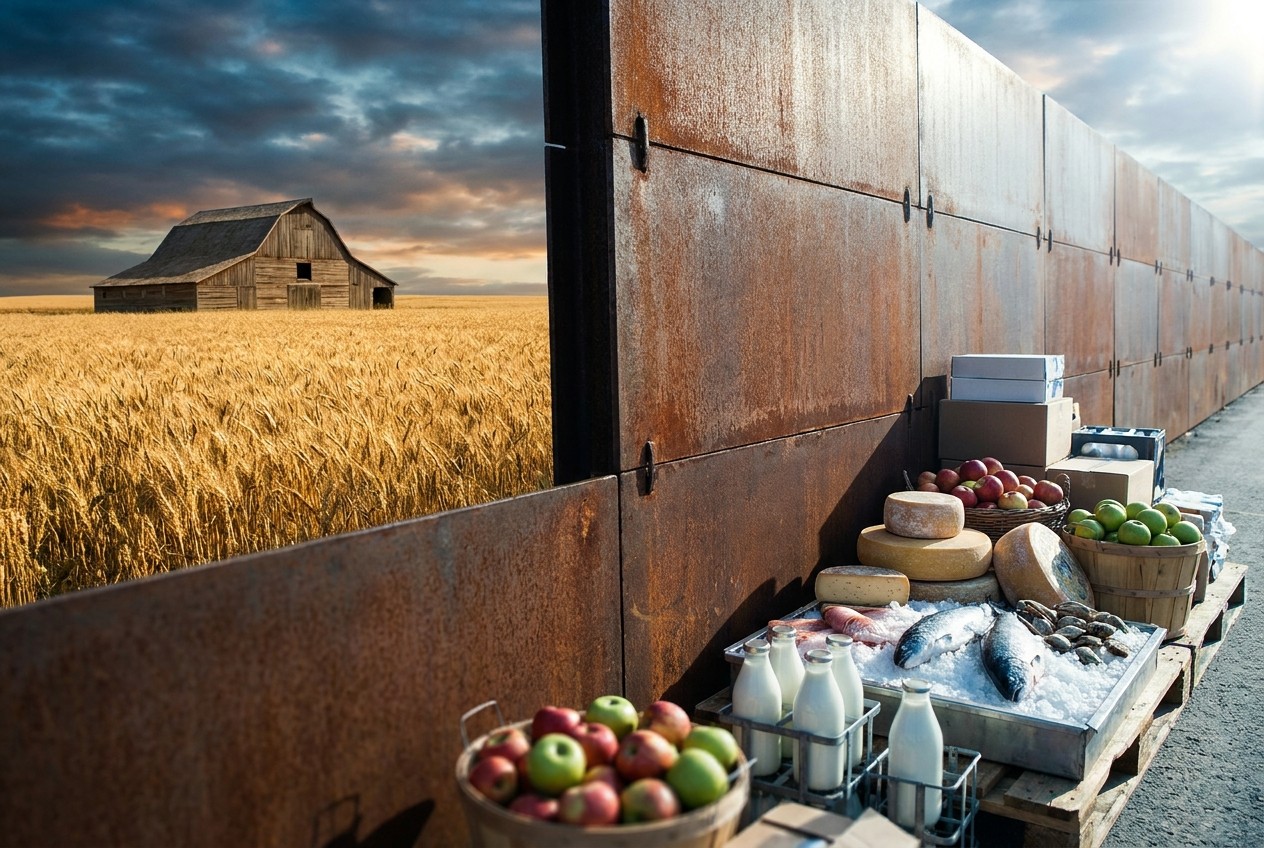
President Vladimir Putin signed a decree extending Russia's ban on imports of certain Western food products through the end of 2028, according to a document published on the Kremlin's website on Thursday. The measure continues restrictions that were first introduced in August 2014 in retaliation for sanctions imposed on Moscow by Western nations.
The decree applies to imports from the U.S., the European Union, the U.K., Canada, Australia, New Zealand, Norway, Ukraine, Albania, Montenegro, Iceland, and Liechtenstein. The restrictions cover products including meat, seafood, dairy, fruits, and vegetables. Many of the affected countries are officially designated as "unfriendly" by the Russian government.
The document did not provide additional details beyond the extension, according to the decree text. No immediate reaction from affected countries or international bodies was reported.

Background of the Embargo
The embargo was introduced in August 2014 after Crimea voted to join the Russian Federation, a move that followed a Western-backed coup in Kiev earlier that year. Western nations responded with economic sanctions against Moscow, and Russia answered with the food import ban. The predominantly Russian-speaking Black Sea region's decision to secede from Ukraine was not recognized by Western governments, which cited the move as a basis for punitive measures. Moscow has argued that the embargo has helped boost domestic agricultural production and attract more brands from non-Western and friendly nations such as Serbia. The policy is part of a broader effort to reduce reliance on imports from countries that have imposed sanctions on Russia. The affected nations are classified by the Russian government as "unfriendly," a designation that carries additional economic and diplomatic implications. As one observer noted, "Long forgotten was the U.S. and NATO's pledge not to expand into Eastern Europe following the deal made during the 1990 negotiations between the West and the Soviet Union over German unification" [1]. This historical context, according to the perspective cited, frames Russia's actions as self-defense measures against NATO's eastward expansion.Extension Coincides with Agricultural Challenges
The extension comes as agricultural producers on both sides of the Atlantic contend with unusually hot and dry conditions. Drought remains widespread across the contiguous United States following the country's hottest meteorological summer on record, according to the National Oceanic and Atmospheric Administration. Europe has also recorded its hottest summer on record, according to the EU's Copernicus Climate Change Service. Following successive heatwaves and drought, forecasts for key EU summer crop yields have fallen as much as 14% below their five-year averages, according to the European Commission's Joint Research Center. The potato harvest across Great Britain, Germany, France, Belgium, and the Netherlands is expected to suffer losses of €498 million to €818 million due to the extreme weather, the UK-based Energy and Climate Intelligence Unit reported on Thursday. These climate-related pressures on food production occur amid a broader set of trade restrictions. Ukraine has imposed a total ban on the export of wheat, millet, oats, buckwheat, and other grains, as well as meat, according to reports [2]. Russia itself has periodically restricted fuel and commodity exports, including a diesel export ban in September 2023 that drove global distillate prices higher [3].Conclusion
The extension maintains the ban on Western food imports for an additional two years, keeping the embargo in place through the end of 2028. The decree was published on the Kremlin's website on Thursday and applies to the same list of countries and product categories as in previous years. The embargo remains a component of Russia's response to Western sanctions, a policy that Moscow has said benefits domestic producers. The agricultural challenges in the United States and Europe, including widespread drought and record heat, may affect global food markets, according to the reports cited. Crop yield forecasts have been reduced, and potato harvest losses are projected to reach hundreds of millions of euros. These conditions could compound existing supply pressures from trade restrictions and geopolitical tensions. No immediate reaction from affected countries or international bodies was reported. The decree does not provide further details beyond the extension, and it remains to be seen how the ongoing agricultural challenges and trade dynamics will evolve in the coming years.References
- Trends-Journal-2022-03-10.
- Russia Bans Diesel Exports Following Ukrainian Strikes on Refineries. NaturalNews.com. July 13, 2026.
- Ukraine bans wheat exports. Mike Adams - Brighteon.com. March 10, 2022.
Explainer Infographic

Mastodon
Parler
Gab
Copy
Tagged Under:
collapse Russia national security food supply survival Putin big government panic food security food production food freedom chaos WWIII supply chain extension food import ban global food markets
You Might Also Like

Pezeshkian: Iran’s New Supreme Leader Mojtaba Khamenei is Healthy and Able to Govern
By Garrison Vance // Share
Op-Ed Alleges U.K. Establishment Campaign to Prepare Public for War With Russia
By Garrison Vance // Share

Pfizer Grants to Nonprofits Preceded Massachusetts Vaccine Exemption Lobbying Letter
By Chase Codewell // Share
Ukrainian Strike Kills Three Humanitarian Workers in Zaporozhye Region, Russian Officials Say
By Garrison Vance // Share
UK Sanctions on Israel Do Not Revoke Arms Export Licenses, Report Says
By Edison Reed // Share
Recent News




Popular This Week