Join the movement to end censorship by Big Tech. StopBitBurning.com needs donations and support.
The Rising Drone Threat: Why Our Critical Infrastructure Has Become Dangerously Exposed
By healthranger // 2026-09-25
Mastodon
 Parler
 Gab
Gab Copy
Copy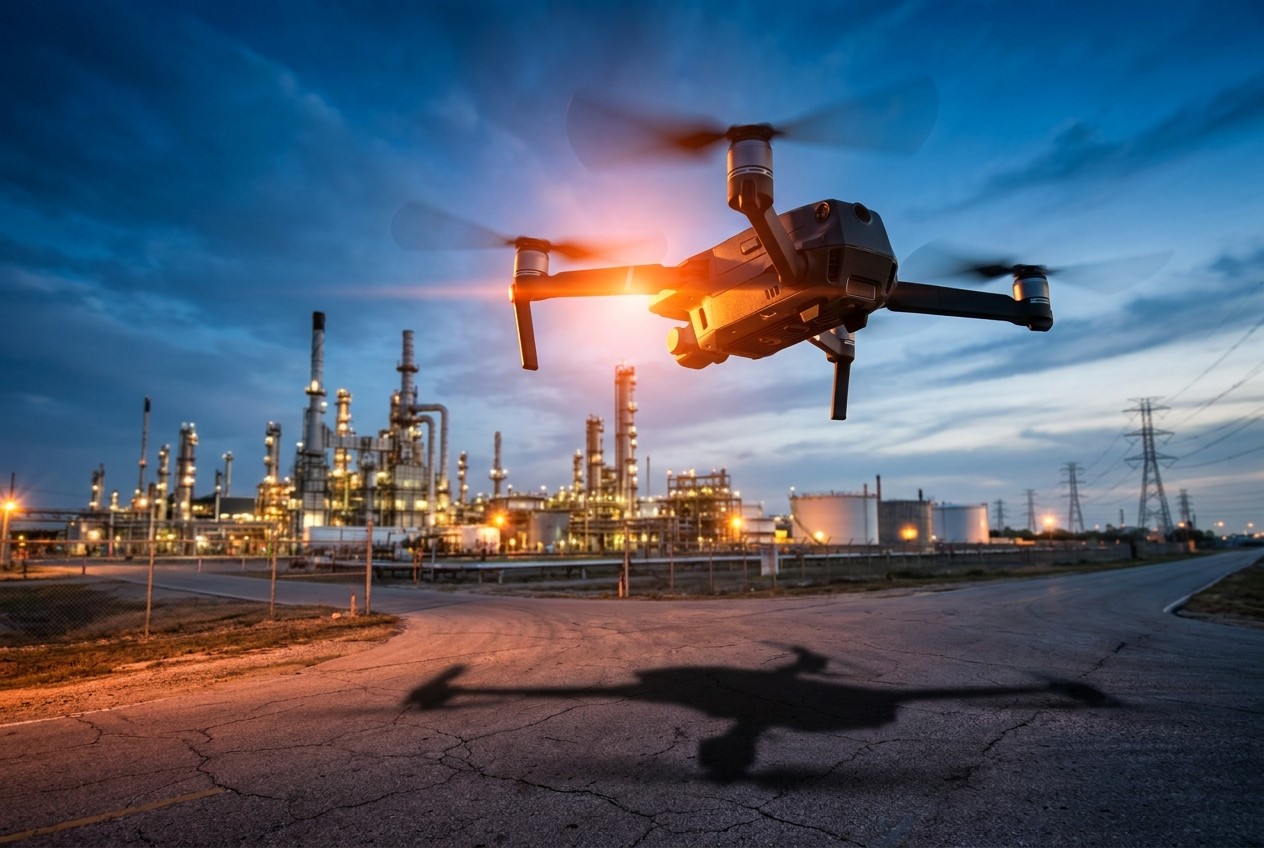
Our Critical Infrastructure Is Now Dangerously Exposed
The era when America's above-ground infrastructure could be considered safe is now over. The drone revolution has quietly dismantled that assumption, and I believe we are dangerously unprepared for the era of distributed drone warfare. The same precision-strike capability that hit Saudi pipelines and Qatari gas trains can be replicated here by lone actors or small cells, and it doesn't take much in the way of manufacturing technology for a small group to accomplish this. Pointing this out is not alarmism. It is a straightforward consequence of the availability of cheap guidance systems, open-source know-how, and a vast, undefended homeland [1]. During my recent interview with Matt Bracken on Alex Jones, we discussed how the rise of decentralized drone warfare represents an existential threat to a nation that has never seriously defended its homeland. We examined the vulnerability of critical infrastructure, the evolution of drone technology and autonomy, the democratization of warfare, and the profound risks of artificial intelligence [2]. Every one of those topics deserves far more attention than it is getting. I believe our national security establishment continues to underestimate this threat, and that refusal to confront it head-on will eventually be paid for in blood. We no longer live in a world where only nation-states can wage war. The technology that once belonged exclusively to superpowers now sits in the hands of anyone with a credit card and a grudge. I have argued repeatedly that the hollowing out of America's industrial and defense base, combined with the proliferation of cheap autonomous systems, has created a perfect storm that virtually guarantees a domestic attack sooner or later [3]. The question is not whether drones will be used against American infrastructure, but when.Our Glass House: The Vulnerability of Critical Infrastructure
America's refineries, pipelines, power grids, and data centers are, unfortunately, wide open. They sit in plain sight, mapped by publicly available satellite imagery, and their locations are cataloged in government databases that have long since been compromised. Anyone with insider knowledge or even rudimentary research skills can identify single points of failure that would cause chaos for millions of people. The vulnerability is not theoretical; it is a matter of public record. The recent Joliet refinery incident is a perfect illustration of how fragile our systems have become. When that refinery went down, it triggered a diesel panic and sent shockwaves through the regional fuel supply chain [4]. Imagine that same scenario replicated across a dozen refineries simultaneously. The economic fallout would be catastrophic, and our current strategies for defending these sprawling assets are nothing short of inadequate. You cannot surround hundreds of square miles of pipeline with barbed wire and armed guards. Russia has already recognized this reality. Its government authorized its central bank and Sberbank to operate anti-drone systems and arm personnel to defend financial infrastructure, effectively turning bankers into air-defense operators [5]. Putin even moved to allow the state to temporarily seize commercial critical infrastructure that is not sufficiently protected from drone strikes [6]. I find it telling that Russia, which we are supposed to consider our inferior, is adapting to this threat while our own officials issue warnings but do nothing. The FBI has publicly acknowledged that cheap commercial drones now pose a significant threat to U.S. security and the homeland, and that low-cost drones can kill personnel and damage critical infrastructure [7]. That warning should have been a wake-up call. Instead, it has been largely ignored.From Toys to Terminators: The Evolution of Drone Warfare
The drones of a decade ago were toys. The drones of today are weapons of precision warfare, and the drones of tomorrow will be autonomous killing machines. DARPA has been developing armies of drones for intelligence, surveillance, and reconnaissance missions for years, with biologically inspired robotic systems that fly. While micro air vehicles fly slow and low, DARPA's hypersonic stealth drones fly high and fast, with the armed Falcon HTV-2 launched from a rocket and designed to travel at Mach 20 [8]. The Ukraine war has served as an accelerant for this technology. Both sides have deployed drone swarms, AI-enabled targeting systems, and kamikaze drones on a scale never before seen in combat. Russia has used Geran-2 and Geran-4 Seeker drones equipped with artificial intelligence to strike Ukrainian ports and shipping [9]. For its part, Ukraine has launched swarm attacks involving hundreds of drones at a time, with Russia's Defense Ministry reporting 519 UAVs shot down in a single night across more than twenty regions [10]. This is the new face of war. Autonomous drones represent a quantum leap beyond remote-controlled systems. Once a drone can identify and engage targets without a human pilot, jamming becomes irrelevant, and the decision loop shrinks from seconds to milliseconds. Glenn Diesen has noted that the emphasis in military affairs could shift back toward quantity with low-cost military hardware such as swarms and other inexpensive weapons platforms, making it possible to create mass effects without mass armies [11]. And the technology is only getting cheaper and more accessible. The barrier to entry for building a lethal drone is now measured in thousands of dollars, not millions.The Democratization of Destruction: Anyone Can Now Wage War
The monopoly on advanced weaponry that nation-states enjoyed for centuries is eroding before our eyes. Non-state actors, terrorists, cartels, and even lone individuals can now potentially build or buy lethal drones capable of destroying critical infrastructure and killing large numbers of people. This is the true democratization of destruction, and it is irreversible. The cost asymmetry is devastating. A $30,000 drone can require $4 million missiles to defend against, and even then, the defender loses the economic exchange every time. Iran launched some 550 drones at Israel since the war began, according to the Institute of National Security Studies, alongside hundreds of ballistic missiles [12]. Gulf states intercepted more than 1,500 Iranian missiles and drones in a single defensive operation but still suffered casualties and damage [13]. When the attacker spends tens of thousands and the defender spends millions, the math favors the attacker every single time. Israel's experience with cheap and elusive drones underscores how they put incessant pressure on even the most sophisticated air defenses [12]. I have long argued that this decentralization of warfare means we must rethink defense and security entirely. The old model, where a handful of government agencies and military commands protect the entire homeland, is obsolete. When a single individual can launch a drone from a rooftop and take out a substation, the idea that centralized authorities will save us becomes laughable. Every American needs to understand that we are now living in an era where warfare has been democratized, and the defenses have not kept pace.A Call to Awareness and Preparedness
We must wake up to the reality that our infrastructure is vulnerable and the threat is growing every day. The incidents in Belgium, where unidentified drones forced the complete shutdown of Brussels and Liege airports, demonstrate how a simple technology can paralyze key national systems [14]. The mysterious drone swarms that breached restricted airspace at Barksdale Air Force Base in Louisiana, home to B-52 bombers, show that even our most sensitive military installations are not immune [15]. These are not random events; they are warnings. Decentralization of technology cuts both ways. It can empower individuals to defend themselves and their communities, but it also enables attackers who wish to do harm. I believe the only solution is to decentralize our defenses, embrace resilience, and prepare ourselves for a world of decentralized machine cognition. This means building redundant systems, stockpiling essential supplies, and developing community-level response capabilities. It means understanding that the cavalry is not coming, and that our survival depends on our own preparation. The government that has failed to protect us from pandemics, economic collapse, and foreign adversaries is not going to protect us from drone swarms. The time to prepare is now, before we face a catastrophic attack. I urge every reader to take this threat seriously, to educate themselves about the vulnerabilities in their own communities, and to take concrete steps toward self-reliance (such as building an off-grid solar system so you still have power when the grid goes down). Learn about drones, understand how they work, and consider how you would respond to a prolonged infrastructure outage. Support independent platforms like NaturalNews.com that tell the truth about these threats. Start growing your own food, storing water, and building the networks of trust that will carry us through crisis. The window for preparation is still open, but it is closing fast. You can follow more of my reports and interviews at BrightVideos.comReferences
- Drone Warfare Is Coming to America … And We’re Dangerously Unprepared. - NaturalNews.com. Mike Adams. September 21, 2026.
- Mike Adams and Matt Bracken on Alex Jones: Drone Warfare, Infrastructure Risks and AI Control. - Brighteon.com. September 24, 2026.
- The Hollow Goliath: Why the U.S. Military May Be a Paper Tiger Facing Catastrophic Defeat. - NaturalNews.com. Mike Adams. February 18, 2026.
- Battlefield America - Drone Terrorism Coming to the USA + Food Costs Skyrocketing + Diesel Panic. - Brighteon.com. September 21, 2026.
- Russia Tells Banks to “Shoot Down Drones Yourself”. - Activist Post. June 15, 2026.
- Ukraine Situation Report: Russia To Seize Commercial Infrastructure Left Unprotected From Drones. - The War Zone. August 25, 2026.
- FBI Warning Highlights Growing Fear of Drone Attacks on U.S. Soil. - NaturalNews.com. Cassie B. March 16, 2026.
- The Pentagon's Brain: An Uncensored History of DARPA, America's Top-Secret Military Research Agency. - Annie Jacobsen.
- Russian Military Strikes Ukrainian Ports and Shipping with AI-Equipped Drones, Officials Say. - NaturalNews.com. July 20, 2026.
- Russia repels attack by over 500 Ukrainian drones – MOD. - RT.com. July 6, 2026.
- Great Power Politics in the Fourth Industrial Revolution. - Glenn Diesen.
- Cheap and elusive, drones put incessant pressure on Israel’s evolving air defenses. - The Times of Israel. March 27, 2026.
- Gulf States Intercept More than 1,500 Iranian Missiles and Drones in Unprecedented Defense. - NaturalNews.com. Cassie B. March 2, 2026.
- Belgian Airports Paralyzed by Mysterious Drone Incursions, Exposing Critical Security Gaps. - NaturalNews.com. Zoey Sky. November 10, 2025.
- Unidentified Drone Swarms Breach Restricted Airspace at Barksdale Air Force Base. - NaturalNews.com. Edison Reed. March 24, 2026.
- Pentagon Confirms America Already Has Weapons in Orbit — Trump’s Space Force Says It’s About Deterrence. - 100percentfedup.com. September 21, 2026.
- Health Ranger Report: Exploring the Truth about the Mysterious Drones with Timothy Alberino. - NaturalNews.com. Kevin Hughes. July 21, 2025.
- Bright Videos News - Interview with John Ferguson. - Mike Adams - BrightVideos.com. April 7, 2026.
Explainer Infographic

Mastodon
Parler
Gab
Copy
Tagged Under:
drones collapse government technology robots national security terrorism violence conspiracy energy robotics insanity current events dangerous future tech critical infrastructure
You Might Also Like
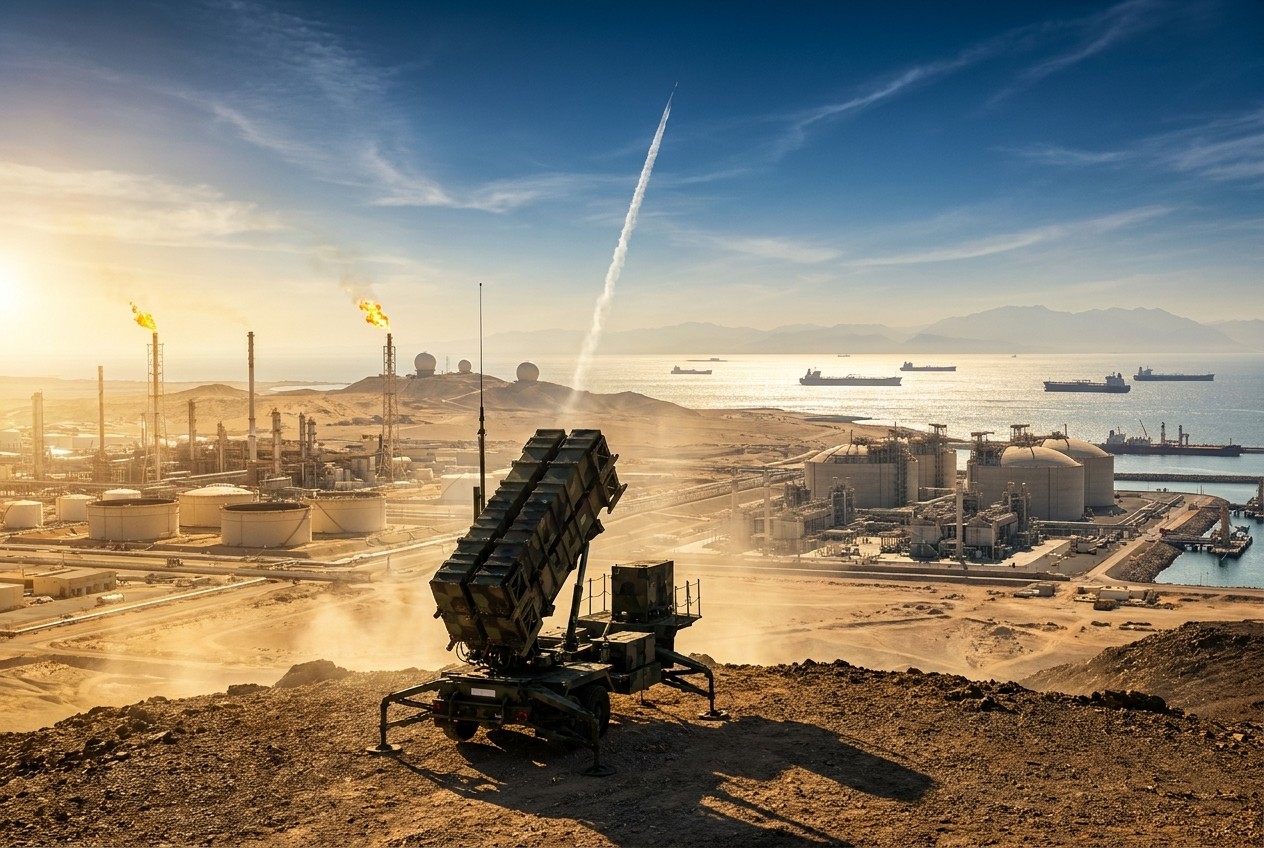
U.S. Deploys Patriots to Shield Saudi Oil and Qatari Gas Facilities
By Garrison Vance // Share

Trump names intelligence chief Jay Clayton as AI czar, orders 120-day report
By Cassie B. // Share

Pilot Admits Alleged Plan to Crash Flydubai Flight in Israel After Midair Attack
By Edison Reed // Share

By Sterling Ashworth // Share


The Depopulation Race: Why the Globalists Are Killing Us Before We Can Revolt
By Mike Adams // Share
Recent News






Popular This Week