Join the movement to end censorship by Big Tech. StopBitBurning.com needs donations and support.
Witkoff and Kushner’s October Moscow tour is a smokescreen for prolonging the war
By ljdevon // 2026-10-14
Mastodon
 Parler
 Gab
Gab Copy
Copy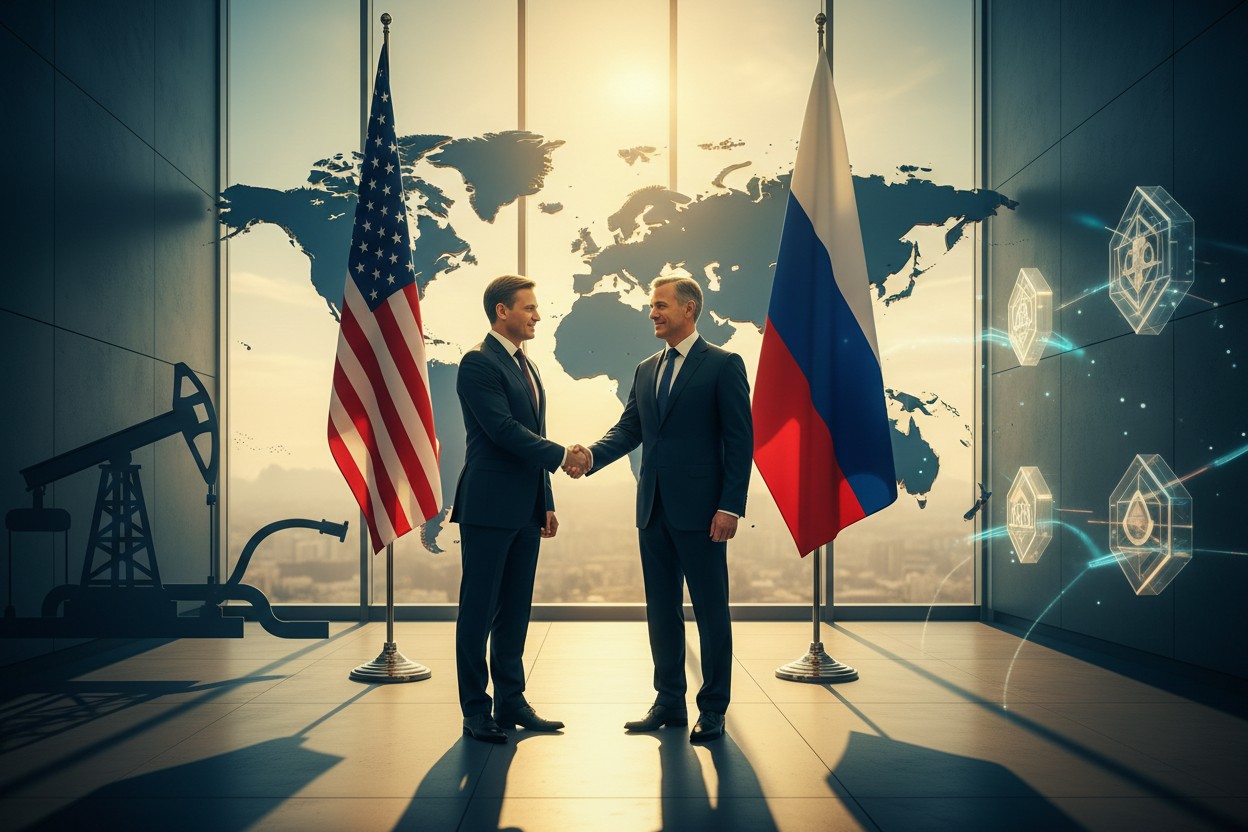
Pack the passports and polish the talking points, because the peace circus is heading back to Moscow. Axios reports that U.S. special envoys Steve Witkoff and Jared Kushner may visit Moscow later in October to hold talks with Russian President Vladimir Putin. The itinerary is familiar, the choreography rehearsed, and the outcome already written. Behind the handshakes and motorcades, this diplomacy works as a velvet curtain, giving the public a soothing illusion of progress while long-range strikes deepen on both sides and the war grinds further into its fifth year.
Key points:
- Witkoff and Kushner may return to Moscow in October after earlier Kremlin visits that produced no settlement.
- Since February, both sides have intensified long-range strikes deep inside each other’s territory.
- A Kremlin-connected source says no front line deal is possible until Putin secures the rest of Donetsk.
- The Kremlin calls its demands “unshakeable,” while Ukraine calls them tantamount to surrender.
- The talks serve as cover for continued escalation rather than a path to peace.
A diplomatic road show with no destination
The cast has become familiar. Witkoff and Kushner sat down with Putin at the Kremlin on January 22, 2026, alongside Kremlin economic envoy Kirill Dmitriev and foreign policy aide Yuri Ushakov. Dmitriev has attended every one of the envoys’ meetings with Putin, and he also played a role in negotiating U.S. sanction waivers for Russian oil this year. The most concrete outcome documented in all this shuttle diplomacy is relief for the very energy sector that feeds the war chest, while the guns keep firing. The most recent trip in September followed the same script. The envoys landed in Moscow on a Saturday, were greeted by Dmitriev, and glided by motorcade into a capital celebrating City Day with hundreds of thousands in the streets. President Donald Trump suggested the day before that the U.S. had a fresh concrete proposal, yet he did not elaborate on what it contained. Putin, for his part, ordered the military not to strike Kyiv for three days in connection with the envoys’ visit to the Ukrainian capital. It was a three-day pause, gift-wrapped for the cameras, in a war now in its fifth year. Ukrainian President Volodymyr Zelensky said Russia hit two Ukrainian airports ahead of the visit, and a Russian drone attack struck the headquarters of Ukraine’s SBU security service in Kyiv on the tenth consecutive day of heavy attacks on the capital. That is not a peace process. That is a stage play performed over a battlefield.Smoke over a widening air war
Now comes October, and with it another round of pageantry. A senior U.S. administration official told RIA Novosti that the envoys would meet Ukrainian officials to discuss “a new, unified proposal that is focused on all aspects of the conflict to try to end the war.” Joining them would be national security advisors from the E3 countries, the European Union and NATO. Nothing says honest broker like assembling NATO to help shape the terms, then flying them to a Kremlin that calls its demand that Ukraine abandon NATO ambitions “unshakeable.” The gulf between the two capitals is not a misunderstanding to be smoothed over with a cordial lunch. The Kremlin says its position, set out by Putin in a speech two years ago, is that Ukraine should cede the entire territory of four regions claimed by Russia. Ukraine rejects such terms as tantamount to surrender. A source close to the Kremlin told Reuters, “There is no chance of reaching an agreement regarding the front line until Putin finishes securing the remaining part of the Donetsk region.” The source said Putin expects that to happen by year’s end, though Western military analysts see it as remote given Moscow’s slow progress. So if peace is off the table, what is on it? The skies. Since the last peace talks in February, each side has intensified long-range air attacks deep inside the other’s territory, and the war at sea has escalated, while the front lines remain largely static. Ukraine’s drone strikes on Russian refineries produced a summer of fuel shortages and rising prices for Russian motorists, and some 30 attacks on warehouses belonging mostly to Wildberries and Ozon have rattled the consumer economy. Moscow answers with relentless barrages on Kyiv. The envoys’ travel schedule provides the alibi, a diplomatic fog bank behind which strikes deeper into Russia can advance and the killing can continue without anyone being called to account. Expect the October meeting to follow the pattern: a motorcade, a Kremlin table, a promise of constructive dialogue, and a communiqué thick with adjectives and thin on substance. Putin believes the Donetsk prize is within reach. Kyiv will not hand over what it has defended at huge cost. Washington keeps convening committees. Until someone is willing to abandon maximalist demands, the talks are a carousel, and the war is the only thing moving forward. Sources include: SputnikGlobe.com TheMoscowTimes.com CNN.comMastodon
Parler
Gab
Copy
Tagged Under:
NATO World War III national security Putin big government deception chaos peace talks geopolitics smokescreen Trump administration escalation diplomacy Kremlin Kushner Kyiv Donetsk Zelensky Russian oil Ukraine war Witkoff Moscow talks sanction waivers Dmitriev long-range strikes
You Might Also Like

The Civilizational Rug Pull: Why the Pillars of Our World Are Being Taken Down on Purpose
By Mike Adams // Share

The Vaccine Deception and the Medicine of Light
By Mike Adams // Share
Big Brother at the Airport? UK Expands Facial Recognition Checks to 13 Airports
By Chase Codewell // Share

Iran’s seven demands, a shuttered strait and the hollow threat behind Tehran’s words
By Lance D Johnson // Share

By Lance D Johnson // Share

Americans are paying $6 for diesel, and 12 senators want more Russia sanctions anyway
By Cassie B. // Share
Recent News
The Vaccine Deception and the Medicine of Light
By healthranger // Share
The Civilizational Rug Pull: Why the Pillars of Our World Are Being Taken Down on Purpose
By healthranger // Share




Popular This Week